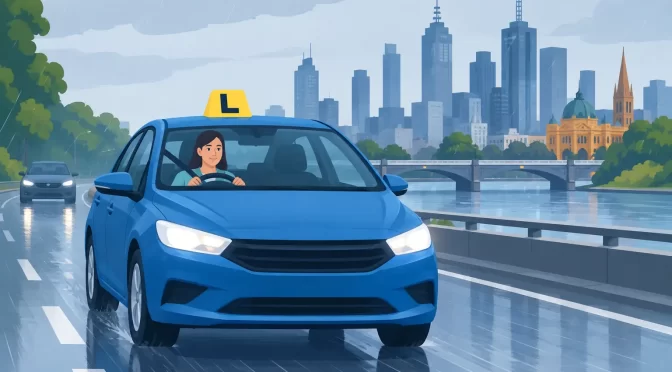
A sudden Melbourne downpour can turn a familiar street into a completely different drive. Wet weather driving safety tips matter most when you are still building experience, because rain affects what you can see, how quickly you can stop and how confidently you make decisions. The goal is not to drive nervously or excessively slowly. It is to give yourself more time, more space and more control.
Rainy lessons are valuable practice. They teach you how the car responds when grip is reduced, how to keep your vision clear and how to stay calm when conditions change. These are real-life skills that also help you show safe judgement in a Victorian driving test.
Prepare the car before you move
Safe wet-weather driving starts before the car leaves the kerb. Take a few extra seconds to check that your windscreen, side windows and mirrors are clear. If the windscreen is fogging up, use the front demister and air conditioning rather than trying to wipe it while driving. Air conditioning removes moisture from the cabin air and can clear fog quickly, even on a cool day.
Turn on your headlights when rain, spray or dark clouds make it harder to see. This is not only about lighting the road ahead. It also makes your vehicle easier for other drivers, cyclists and pedestrians to notice. Check that your wipers are working properly and replace worn blades that smear rather than clear water.
Your tyres do a great deal of work in the wet. They need enough tread to move water away from the road surface and maintain grip. If the tyres look bald, are damaged or the tyre-pressure warning light appears, do not ignore it. Ask a parent, vehicle owner or mechanic to inspect the car before your next drive.
Wet weather driving safety tips that make the biggest difference
The key adjustment in rain is simple: slow down early and leave more room. A wet road increases stopping distance, especially after a dry spell when oil and dirt rise to the surface. The first rain after several dry days can be particularly slippery, even when the shower does not look heavy.
Create a larger following gap
In dry conditions, you should already keep a safe gap from the vehicle ahead. In rain, increase it. A useful guide is to allow at least four seconds, and add more space when rain is heavy, traffic is moving quickly or spray is limiting your view.
Pick a fixed object ahead, such as a signpost or power pole. When the vehicle in front passes it, count calmly: one thousand and one, one thousand and two, one thousand and three, one thousand and four. If you reach the object before four seconds, ease off and increase the gap.
This space gives you time to brake progressively instead of reacting suddenly. It also improves your view around the car in front, helping you spot brake lights, puddles, pedestrians or changing traffic earlier.
Brake and steer smoothly
Sudden inputs are more likely to unsettle the car on wet roads. Begin braking earlier, press the brake pedal progressively and finish slowing down before the corner where possible. Then steer smoothly through the turn and accelerate gently once the wheels are reasonably straight.
Avoid coasting into corners in neutral. Select the appropriate gear before the turn so you have control and can use gentle engine braking if needed. For manual drivers, this is an important habit: brake first, choose the right gear, then steer. Do not rush through the gears because the road is wet.
Be especially careful at intersections, roundabouts, painted arrows, tram tracks, metal covers and pedestrian crossings. These surfaces can become slippery when wet. A safe driver does not panic around them – they reduce speed, keep steering steady and avoid harsh braking over the surface.
Watch for standing water, not just rain
Deep puddles can hide potholes, kerb edges and debris. Driving through them too fast can cause a loss of grip, damage the vehicle or throw water onto pedestrians waiting near the footpath. If there is water across the road, slow down well before reaching it and assess whether it is safe to continue.
Never assume a flooded section is shallow. If you cannot judge the depth, choose another route or wait until it is safe. Water can enter the engine, affect braking and sweep a vehicle off course far more quickly than many learners expect.
After driving through a shallow puddle, lightly test the brakes when it is safe to do so. This helps confirm they are responding normally. Keep both hands on the wheel when passing through water, as the car may pull slightly depending on the road surface.
Know what to do if the car aquaplanes
Aquaplaning happens when tyres lose contact with the road because water builds up underneath them. The steering may feel light, the car may not respond as expected, or you may feel it glide rather than grip.
If this happens, stay calm. Ease off the accelerator gently, keep the steering wheel straight where possible and avoid sudden braking or sharp steering. Let the vehicle slow naturally until the tyres regain contact with the road. Harsh reactions can make a skid more likely.
The best prevention is sensible speed, good tyres and avoiding large areas of standing water. There is no benefit in proving you can keep up with faster traffic when conditions are unsafe. Drive for the road and weather, not for the pressure behind you.
Visibility is a safety decision
Rain changes what other road users can see as much as it changes your own view. Spray from trucks and buses can briefly block your windscreen. Low sun after rain can reflect off wet roads. At night, headlights and streetlights can create glare that makes lane markings harder to follow.
Keep your eyes moving. Look well ahead, check mirrors regularly and scan both sides of the road for people stepping out from umbrellas, parked cars or bus stops. Cyclists and motorcyclists can be harder to see in wet conditions, and they also need more room to brake and manoeuvre safely.
If glare is making it difficult to see, reduce speed and increase the gap ahead. Do not rely on the car in front to choose your line or braking point. You must still be able to see enough distance to stop safely.
Adjust your driving test mindset in the rain
A rainy test day can make learners worry that every small mistake will count against them. In reality, rain gives you an opportunity to demonstrate safe decision-making. Your assessor will expect you to adapt your speed, following distance, observation and braking to the conditions.
You do not need to drive overly slowly or hold up traffic without reason. You do need to show that you can recognise reduced grip and visibility. Approach intersections earlier, leave room behind vehicles, make deliberate head checks and avoid rushing manoeuvres such as reverse parallel parking.
Before the test begins, make sure the demister, wipers and headlights are set correctly. If the windscreen fogs or rain becomes heavy during the drive, deal with it safely. A clear view is essential, and taking a sensible moment to manage visibility is better than continuing when you cannot see properly.
For overseas licence holders, wet conditions can also highlight differences in local driving habits. Melbourne roads may include tram tracks, hook turns in the CBD, busy roundabouts and rapidly changing weather. Build practice gradually on the roads you are likely to use, rather than waiting until test day to experience them.
Build confidence through guided practice
The best wet-weather practice is planned, not rushed. Start in lighter rain on quieter local roads, then progress to busier intersections, higher-speed roads and parking exercises as your control improves. Practise stopping smoothly, judging gaps, using the demister and keeping a consistent road position.
A patient instructor can give you clear feedback on whether you are braking too late, following too closely or hesitating when conditions are safe. At Learning Path Driving School, lessons can be tailored around the skills that make you feel uncertain, whether that is wet-weather parking, roundabouts, lane changes or test-route preparation.
Rain does not need to stop you from becoming a confident driver. Treat it as a signal to slow down, look further ahead and make calm decisions – the habits that protect you long after you have passed your test.