



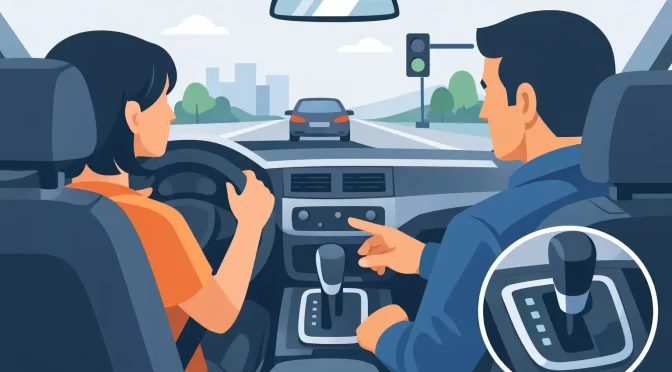
The first few minutes behind the wheel can feel like a lot: mirrors, pedals, steering, traffic lights, other cars and an instructor sitting beside you. Automatic driving lessons for beginners remove one major task from that list. Without a clutch or gear changes to manage, you can focus earlier on observation, positioning and making safe decisions on Melbourne roads.
For many learner drivers, that focus is the difference between feeling overwhelmed and making steady progress. An automatic vehicle is not a shortcut around safe driving. It is a practical way to learn the skills that matter most, one calm, coached step at a time.
Why an automatic can be the right first choice
In an automatic car, the vehicle selects gears for you. Your core controls are straightforward: accelerator, brake, steering wheel, indicators and the selector for park, reverse, neutral and drive. This gives a complete beginner more mental space to look well ahead, check mirrors, scan intersections and respond smoothly to changing conditions.
That matters on busy local roads around Melbourne, where a learner may need to deal with trams, cyclists, school zones, hook turns, roundabouts and narrow residential streets. You still need good judgement and sound vehicle control, but you are not also trying to prevent a stall while deciding whether it is safe to enter traffic.
Automatic lessons are particularly useful if you are nervous, returning to driving after a long break or learning under time pressure. They can also suit overseas licence holders who already understand driving but need to adjust to Victorian road rules, left-side driving habits and the expectations of a VicRoads test.
There is one trade-off worth understanding before you book. If you pass your Victorian practical driving test in an automatic vehicle, your licence will generally carry an automatic-only condition during the probationary period. If driving a manual car is important for your future work, family vehicle or travel plans, manual lessons may be the better long-term option. If your priority is to drive safely and confidently in the automatic cars most people use every day, an automatic is often the sensible place to start.
What automatic driving lessons for beginners cover
A quality beginner lesson should not start by sending you into heavy traffic. First, you need to feel settled in the driver’s seat and understand what the car is doing. Patient instruction builds each skill in a logical order, with clear feedback after every attempt.
Starting with the controls and a safe routine
Your instructor will show you how to set up the seat, steering wheel and mirrors so you can reach the pedals comfortably and see clearly. You will learn the basic dashboard controls, how to select drive and reverse, how to use the handbrake, and why a proper observation routine comes before moving off.
Early practice is usually done in quiet streets or low-pressure areas. You will learn smooth braking, gentle acceleration, steering through turns and keeping a safe position on the road. These basics may sound simple, but they create the control needed for every later skill.
Building observation and road awareness
New drivers sometimes concentrate so hard on the road directly in front of the bonnet that they miss what is developing around them. Good coaching helps you look further ahead and build a repeatable pattern: check mirrors, identify hazards, choose a safe speed and act early.
You will practise recognising pedestrian crossings, parked-car doors, changing speed limits, give way signs and vehicles that may turn across your path. In Melbourne, that can also include sharing the road safely with trams and cyclists. The aim is not to memorise a script. It is to learn how to read each situation before it becomes urgent.
Learning the manoeuvres that cause the most stress
Parking and low-speed manoeuvres make plenty of learners anxious because they require accuracy while observing all around the vehicle. Automatic cars simplify the pedal work, allowing you to concentrate on reference points, steering timing and careful checks for people or vehicles nearby.
Lessons should progressively cover reverse parallel parking, three-point turns, kerbside stops, reverse parking and moving in and out of traffic. You may need more time on one manoeuvre than another. That is normal. A patient instructor should adjust the lesson rather than rush you through a skill before you feel ready.
Preparing for real Melbourne driving
Once the foundations are reliable, lessons should move beyond quiet streets. You may practise at roundabouts, multi-lane roads, shopping-centre car parks, arterial roads and test-style routes. The purpose is to make the change gradual, not to throw you into situations before you have the tools to manage them.
At this stage, your instructor can also identify habits that may cost you marks in a driving test, such as incomplete head checks, late braking, poor lane position or hesitating when it is safe to go. Clear feedback is useful because it gives you a specific skill to practise, not just the vague feeling that you need to do better.
How many lessons will you need?
There is no honest one-size-fits-all answer. A learner who has never driven may need regular lessons over several months, while someone with supervised family practice may progress faster. Adults returning to driving may quickly regain control skills but need extra coaching around current road rules or confidence in heavy traffic.
Your progress also depends on how often you practise between lessons. A weekly session can work well when it is supported by supervised driving, because you return with recent experience and can build on it. Long gaps can make each lesson feel like a restart.
Think of professional lessons as focused coaching rather than the only time you drive. An instructor can correct errors early, explain Victorian test standards and plan the next step. Practice with a qualified supervising driver helps make those skills automatic. Both have value.
Choosing a driving instructor when you are nervous
The right instructor makes a noticeable difference for a beginner. You need someone who explains instructions before the moment arrives, stays calm when you make a mistake and gives feedback you can use straight away. Shouting, vague criticism or rushing into difficult roads too soon does not build confidence.
Look for an instructor who understands the current VicRoads driving test requirements and can tailor lessons to your starting point. Flexible lesson times are also valuable if you are balancing school, university, shift work or family commitments. Affordable packages can help you plan regular practice rather than treating lessons as a last-minute expense before the test.
At Learning Path Driving School, beginner automatic lessons are structured around your confidence and skill level, from first controls through to test-ready driving. The goal is not simply to get you through one route on one day. It is to help you make safe decisions when the road situation is unfamiliar.
Getting more from your first lesson
Arrive in enclosed shoes that let you feel the pedals properly, and bring your learner permit. If you are worried about making mistakes, say so at the beginning. A good instructor can start more slowly, talk you through each action and choose an appropriate area for your first drive.
Try not to judge yourself by how quickly another learner progresses. Some people are comfortable steering within minutes but need time with intersections. Others understand road rules well but take longer to develop smooth braking. Progress is about becoming consistent, not proving you were perfect on day one.
Before your next lesson, reflect on one or two things that went well and one skill you want to improve. Maybe your turns were smooth but your mirror checks felt rushed. Maybe you parked accurately but approached roundabouts too cautiously. Small, specific goals make practice feel achievable and show you exactly where your confidence is growing.
Your first lesson does not need to be impressive. It only needs to be a safe beginning. With regular practice, patient coaching and a clear plan, the controls that feel unfamiliar today can soon become the calm routine that carries you confidently towards your Victorian licence.
