



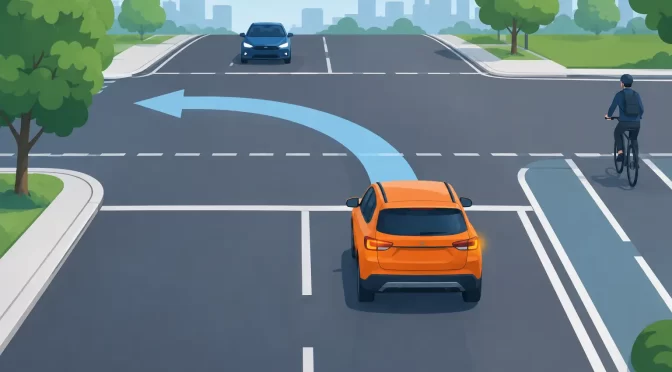
A hook turn can feel backwards the first time you see one: you move into the left lane to make a right turn. This Victorian left turn hook guide clears up the wording first, then shows you exactly what to do. In Victoria, a hook turn is a right turn made from the left lane, usually at selected Melbourne intersections with tram tracks. It is not a left turn.
For learner drivers, especially those preparing for a VicRoads test or converting an overseas licence, hook turns can be intimidating. The good news is that the routine is clear once you understand why it exists. Practise it with calm observation, correct positioning and good timing, and it becomes another manageable driving skill.
Why Melbourne uses hook turns
Hook turns keep right-turning cars out of the path of trams travelling through the centre of the road. Rather than waiting in front of a tram track for a break in oncoming traffic, you approach from the left lane, enter the intersection when permitted, wait safely, then complete the right turn when the traffic lights change.
You will most often see hook turns in and around Melbourne’s CBD, although they can appear elsewhere. Never assume a hook turn is allowed simply because there are tram tracks. Only perform one where the traffic signs tell you to turn right from the left lane. At intersections without that sign, use the normal right-turn procedure.
This is an area where experienced drivers from overseas can be caught out. In many countries, turning right from the left lane would be incorrect. In Melbourne, it is required at signed hook-turn intersections. Read the signs early and follow the road markings, rather than copying the car in front of you.
Victorian hook turn guide: the step-by-step method
The key is to plan ahead. A late lane change, a missed signal or stopping in the wrong position can create risk quickly in busy city traffic.
1. Spot the sign before the intersection
As you approach, look for the hook-turn sign. It will tell you that right turns must be made from the left lane. Check your mirrors, indicate left if you need to move into the left lane, and make the lane change only when it is safe.
Do not swing across multiple lanes at the last moment. If you miss the correct lane, continue safely and find another route. On a driving test, choosing safety over a rushed manoeuvre is always the better decision.
2. Move into the left lane and indicate right
Once you are in the left lane, indicate right to show that you intend to turn right. This can feel unusual, but your right indicator tells drivers, cyclists and pedestrians what you plan to do.
Stay alert for cyclists using the left side of the road, pedestrians near the crossing and vehicles stopping or moving away from the kerb. Keep a safe speed and leave enough space to respond if traffic slows.
3. Enter the intersection on a green light
When the light facing you is green, enter the intersection while remaining as far left as practical. Follow any lane arrows or painted markings. Do not turn right immediately.
Position your vehicle in the intersection so you are clear of the pedestrian crossing and do not block vehicles travelling straight ahead. You are waiting to make the turn, not waiting in the middle of a traffic lane. Keep your wheels straight and continue checking mirrors and surrounding traffic.
If pedestrians are crossing the road you are about to enter, give way to them. Watch for cyclists and motorcyclists as well. Busy CBD intersections demand patient observation, not quick guesses.
4. Wait for the lights on the road you are entering
Remain in position until the traffic lights for the road you are turning into change to green. This is your signal to complete the hook turn, provided the path is clear.
Check that pedestrians have cleared your path, scan for vehicles that may still be legally clearing the intersection, and turn into the correct lane on the new road. A controlled, smooth turn is better than accelerating hard to beat other traffic. Your aim is to leave the intersection safely and settle into traffic without disrupting anyone else.
The observation routine that keeps hook turns safe
A hook turn is not just about the traffic lights. It is a full observation exercise. Before moving into the left lane, use mirrors, indicate and check over your shoulder where needed. As you enter the intersection, watch for people crossing, cyclists beside you, trams and changing traffic conditions.
While waiting, avoid staring only at the signal. Check ahead, to both sides and in your mirrors. When the relevant light changes, take one final look through the turn before moving. This matters on a driving test, but more importantly, it is how you avoid a conflict with a pedestrian, cyclist or late-clearing vehicle.
For anxious learners, it helps to use a simple self-talk routine: sign, left lane, right indicator, green light, wait, check, turn. You do not need to rush through the words. With practice, the sequence becomes natural.
Common hook-turn mistakes to avoid
The most common error is turning right from the normal right-turn lane at an intersection marked for hook turns. This may place you in the way of trams and is not following the signed instruction.
Another mistake is entering the intersection on a red light. You must wait for a green light facing you before entering. Some drivers also stop before the intersection and wait for the other road’s lights to turn green. That is not how the manoeuvre works. You enter on your green light, position safely inside the intersection, then wait for the signal change that allows you to finish the turn.
Poor lane position can also cause problems. Stopping on a pedestrian crossing, blocking a tram path or crowding cyclists near the kerb creates unnecessary risk. If the intersection is unfamiliar, reduce your speed early, read every sign and give yourself time to make decisions.
Finally, do not treat the green light on the road you are entering as permission to ignore hazards. Green means you may proceed when safe. Pedestrians, cyclists and other vehicles still need your full attention.
Hook turns on a Victorian driving test
A hook turn may be included in a Melbourne driving test if the test route uses a suitable signed intersection. Examiners are looking for safe, legal decision-making, not a perfect performance at high speed.
They will expect you to recognise the sign, choose the correct left lane early, indicate correctly and enter only on a green signal. Your positioning in the intersection should be sensible and should not interfere with pedestrians, trams or other traffic. When it is time to turn, you need to complete the turn smoothly after checking that the path is clear.
A minor hesitation is usually safer than moving without enough observation. However, repeated unnecessary delay can affect traffic and may show that you do not understand the procedure. The best preparation is guided practice at real Melbourne intersections, starting in quieter conditions before building up to busier traffic.
When you are not sure what to do
If signs, road markings or traffic conditions are confusing, slow down and focus on the instruction closest to the intersection. Do not follow another driver’s actions blindly. They may be changing lanes, going straight ahead or making an error themselves.
If you realise too late that you are not in the correct lane, continue straight ahead if it is safe and legal. You can turn around later. Trying to force your way across lanes is far more serious than missing a turn.
A patient instructor can make a major difference here. At Learning Path Driving School, lessons can include practical hook-turn coaching as part of Melbourne driving-test preparation, with clear feedback on lane choice, observation and timing. Repeating the manoeuvre in a supportive setting helps replace panic with a reliable routine.
Hook turns are one of Melbourne’s most distinctive road rules, but they do not need to be a mystery. Read the sign early, take the left lane, signal right, wait in the correct position and turn only when the signal and your checks tell you it is safe. That calm, methodical approach will serve you well far beyond test day.
