



Both physical and mental abilities, such as judgment as well as vision, are affected while you are driving at night Therefore, just throwing on your headlights and heading out it’s not nearly going to be enough. In addition to hindering visibility, blinding glare from the other car at night can lead to driver fatigue, which is more dangerous at night than during the day.
So, here are some professional advice from a driving school in Narre Warren to ensure you can navigate the roads with confidence when the sun goes down.
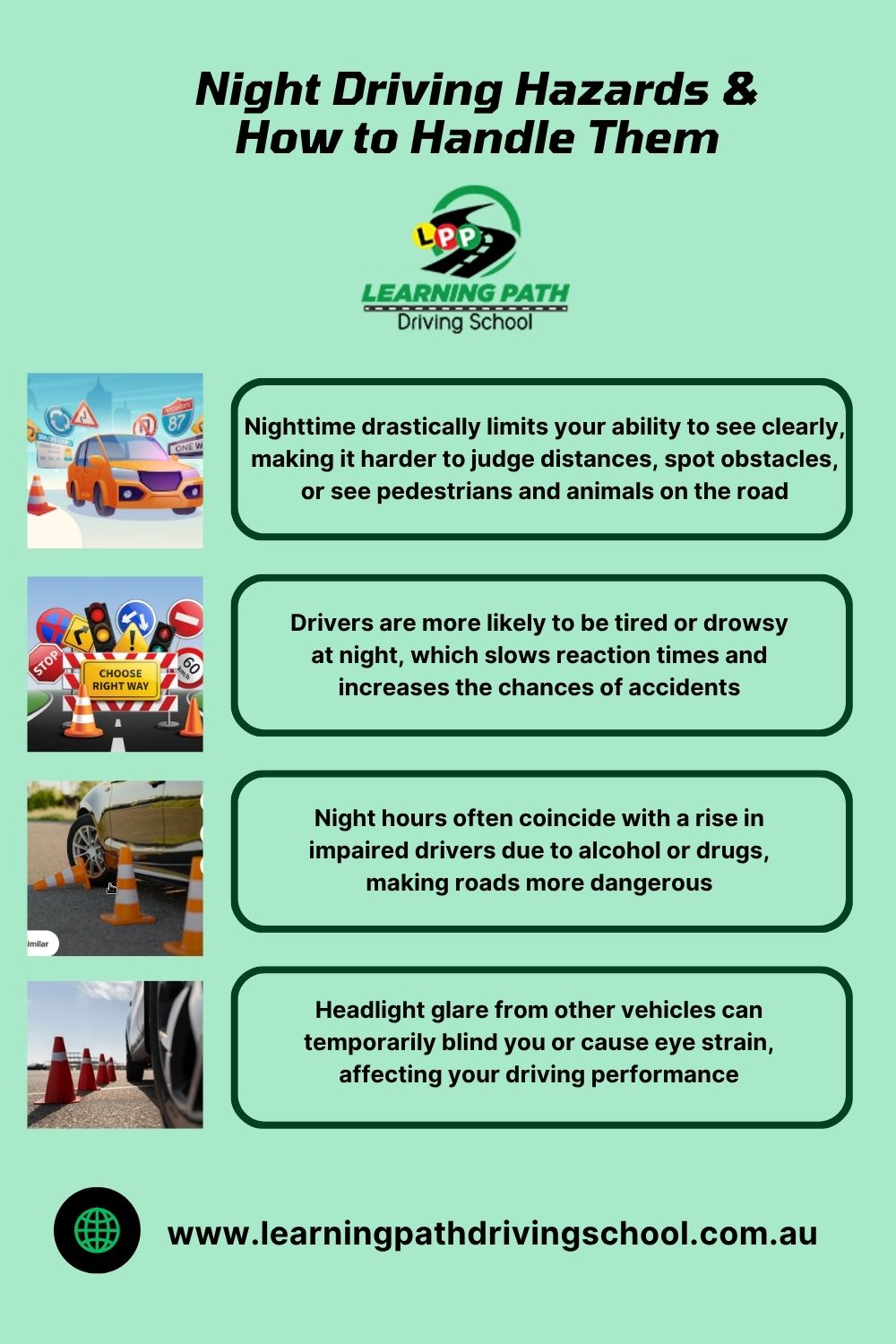
Image Source – au.pinterest.com
Check Your Lights
Always give your headlights, tail lights and indicators a check before you leave the house!
The glasses over the light are super easy to clean too, so if there’s any dirt or smudge on them, clean before you hit the roads. Ensure your headlights are correctly aimed – improperly adjusted headlights may limit your field of vision or blind oncoming drivers. If you really have to, turn on your high beams, but remember to lower them when you see another vehicle.
Adjust Your Driving Speed
Driving at night tends to be slower to compensate for less light. Furthermore, for the high beams, you can’t see as far during the night as you can during the day. A lower speed will give you more time to react to potential hazards like animals, potholes or pedestrians.
Remember what your driving school in Clayton taught you? Never drive faster than the ability of your headlights to hit something.
Maintain a Safe Distance Behind Other Vehicles
Leaving more distance between your car and the vehicle in front at night provides more time to respond to abrupt stops or hazards. You’re right that tailgating at night is especially dangerous because it decreases the distance you can see down the road and therefore the distance you will need to stop at a given speed.
Pro Tip: Stay three car lengths away from the car in front of you.
Combat Glare Effectively
Dazzling glare from an oncoming car or reflecting surface can cause mishaps. To avoid glare, keep your eyes fixed to the left instead of straight at oncoming headlights. Make sure your windscreen is clean both inside and out, as grime and streaks can cause more glare. Also, switch your rearview mirror to night setting.
Avoid Driving When Fatigued
Fatigue driving is as lethal as driving while on intoxication. Your reaction times are slower, and you may misjudge distances, drift in and out of lanes. If you’re sleepy, pull over, stretch your legs, or change drivers if you can. Forced to take a long trip by car? Halt every 2–3 hours.
Apply Defensive Driving Tactics
Be aware of other drivers, drive within speed limits, and always be alert – the mantra of a driving school in Berwick.
Risk from drunk or distracted drivers may also increase at night. Eliminate distractions within your vehicle, and be on the lookout for unexpected driving patterns by others. Always use your indicators properly to indicate when you want to change lanes or make a turn. Lastly, if you must stop, turn on your hazard lights and pull over safely onto the side of the road.
Night driving doesn’t have to be scary. With these useful tips and mastering defensive driving from a driving school in Heatherton, you’ll do just fine!
Want to Learn Driving Like a Pro?
Join Learning Path Driving School – where newbies turn into pro’s. To learn more about our driving lessons and timings, call 0438416286 for an enquiry.
