



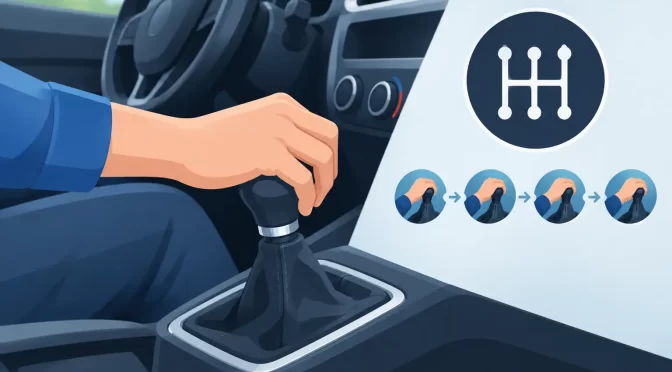
A rough gear change can make a learner feel as though everyone in the car is noticing. The car jolts, the engine gets loud, and suddenly the next set of lights feels stressful. Learning how to change gears smoothly is not about rushing your hands or having perfect timing straight away. It is about understanding what the engine, clutch and road speed are asking you to do.
For Melbourne learners, smooth gear changes also help with the things assessors look for in a VicRoads driving test: controlled vehicle operation, good observation, appropriate speed and calm decision-making. With a little structured practice, manual driving starts to feel far more natural.
What makes a gear change smooth?
A manual car needs the engine speed and road speed to suit the gear you select. The clutch briefly disconnects the engine from the wheels so you can change gear. When you bring the clutch back up, the engine and wheels reconnect. If the clutch comes up too quickly, or the selected gear does not suit your speed, the car can jerk.
A smooth change usually comes from three simple actions: fully pressing the clutch, selecting the correct gear without forcing the gear stick, then bringing the clutch up progressively while using gentle accelerator input. The order matters, but so does your calmness. Trying to complete every movement at top speed often causes the jolt learners are trying to avoid.
You do not need to stare at the gear stick. Learn the gear pattern while parked and with the engine off. Your hand should be able to find first, second, third and fourth confidently, while your eyes stay where they belong – scanning the road ahead and checking mirrors when needed.
How to change gears smoothly when accelerating
When you move away, first gear gets the car rolling. It is not designed for building much speed. Once the car is moving steadily, changing to second will usually make the engine quieter and the ride more comfortable.
As a practical method, ease off the accelerator, press the clutch fully to the floor, move the gear stick into the next gear, then release the clutch steadily. As the clutch reaches its engagement point, gently return to the accelerator. In most modern learner cars, this can be done in one calm, continuous movement.
The biggest mistake is releasing the clutch as though it is an on-off switch. Letting it spring up can cause a sharp lurch, especially between first and second. Give yourself a fraction more time at first. As your foot control improves, your changes will naturally become quicker without becoming rushed.
Listen to the engine as well as watching your speed. If it sounds strained or overly loud, you may need a higher gear. If the car feels like it is labouring, shuddering or slow to respond when you accelerate, you may be in too high a gear. Every car feels slightly different, so use the sound and feel of the vehicle rather than relying only on a fixed speed rule.
First to second: the change learners notice most
The first-to-second change is often the trickiest because the difference between the gears is relatively large. The car is also still building momentum, which means abrupt clutch movement is more noticeable.
After moving off, allow the car to settle before changing. Do not select second the instant the wheels turn unless the situation requires it. Ease off the accelerator, clutch fully in, select second, and lift the clutch with control. A small pause before reapplying the accelerator can help when you are new to manual driving, but avoid coasting with the clutch held down for too long.
If the car jerks forward, the clutch probably came up too fast or you added accelerator too early. If it slows sharply, you may have lifted the clutch before the engine speed had settled. Neither error means you are a bad driver. It simply tells you what to adjust on the next change.
Downshifting smoothly before corners and hills
Changing down a gear gives you more pulling power and better control when you need to slow down, turn, climb a hill or prepare to accelerate again. The key is to choose the lower gear before you need it, not halfway through the problem.
Approaching a corner, check your mirrors, ease off the accelerator and brake to a safe speed first. Once you are close to the speed suited to the turn, press the clutch, select the lower gear and release the clutch progressively. Complete the gear change before steering through the corner where possible. This keeps both hands available for steering and helps the car remain balanced.
Avoid selecting a low gear while travelling too fast. For example, dropping into second at an unsuitable speed can make the engine rev hard and cause the car to slow suddenly. Brake first, then select the gear that matches your new speed.
On Melbourne’s busier roads, planning makes a real difference. If traffic is slowing near a roundabout, pedestrian crossing or queue of cars, look ahead early. You may only need to ease off and select a lower gear once. Repeatedly accelerating, braking and changing gears because you are reacting late makes the drive less comfortable and less controlled.
Common habits that cause jerky gear changes
Many rough changes come from habits rather than a lack of ability. Resting your foot on the clutch pedal can partially disengage it and reduce control. Keep your left foot on the footrest when you are not changing gear.
Looking down at the gear stick is another common issue. It takes your attention away from traffic, hazards and road position. Practise the gear pattern in a safe, parked car until the movement becomes familiar.
Other habits to correct include:
- Changing gear too late, when the engine is already noisy or struggling.
- Holding the clutch down while rolling instead of selecting an appropriate gear.
- Forcing the gear stick when it will not enter a gear. Keep the clutch fully down and try again calmly.
- Skipping gears without considering your speed, traffic conditions and the car’s response.
Skipping from fourth to second can be appropriate when slowing for a turn, but it depends on your road speed. There is no prize for making the fewest gear changes. Your goal is to select a gear that gives you safe, responsive control.
Smooth gears in stop-start traffic
Stop-start traffic can test your patience, particularly on an uphill road. Leave a sensible gap to the vehicle ahead where conditions allow. This gives you room to creep forward gradually instead of moving off, braking hard and stopping every few seconds.
Use first gear for slow crawling speeds and second only when the car has enough momentum. If traffic stops for more than a brief moment, select neutral and apply the brake rather than holding the clutch down continuously. This gives your left leg a break and prevents you from inching forward by accident.
For hill starts, secure the car with the handbrake, find the clutch engagement point, apply a little accelerator and release the handbrake once the car is ready to move. Rushing this sequence is the usual cause of rolling back or stalling. Patient practice on a quiet hill builds the confidence you need before tackling busy traffic.
How to change gears smoothly in your driving test
During a Victorian driving test, assessors are not expecting every gear change to be invisible. They are looking for safe control. One slightly rough change is unlikely to decide your result, but repeated jerking, stalling, looking down or choosing unsuitable gears can affect the overall drive.
Prioritise observation and road safety over trying to make every change perfectly quiet. Check mirrors before slowing, choose the correct speed for intersections and keep both hands on the steering wheel whenever you are not actively changing gear. If you stall, stay calm: secure the car, restart it safely and continue when clear.
A patient instructor can identify whether your issue is clutch release, gear timing, road-speed judgement or nervousness under pressure. At Learning Path Driving School, manual lessons focus on these small corrections so you can build reliable control, not just memorise a route.
Smooth gear changes come from feeling the car rather than fighting it. Give yourself time to practise in quiet streets, listen to the engine, look well ahead and let each movement become deliberate. Soon, the clutch, gears and accelerator will start working together – and you can put more attention where it matters most: driving safely and confidently.
