


A green light is not a signal to switch off. At busy Melbourne crossroads, one rushed turn, missed pedestrian or poor gap choice can turn a straightforward manoeuvre into a dangerous situation – or cost valuable marks in a driving test. The top mistakes at intersections usually happen because learners try to make a decision before they have properly checked what is around them.
Intersections demand observation, planning and patience. Whether you are learning in Clarinda, Clayton, Mount Waverley or elsewhere in Melbourne, the same approach applies: slow down early, read the road and make only the move that is safe and legal.
Why intersections challenge learner drivers
An intersection brings several road users together at once. You may need to respond to traffic lights, turning vehicles, cyclists, pedestrians, lane arrows, trams, give way signs and changing traffic conditions within a few seconds.
For new drivers, the pressure often comes from cars waiting behind them. Do not let another driver’s impatience make your decision. A short wait for a safe gap is always better than entering an intersection when you are unsure. VicRoads assessors are looking for safe judgement, not speed for its own sake.
Experienced overseas drivers can also find Victorian intersections challenging. Road rules may feel familiar, but local lane markings, hook turn areas, tram movements and test expectations can be different from what you know. Taking time to practise these situations makes a real difference.
Top mistakes at intersections and how to avoid them
Entering without checking properly
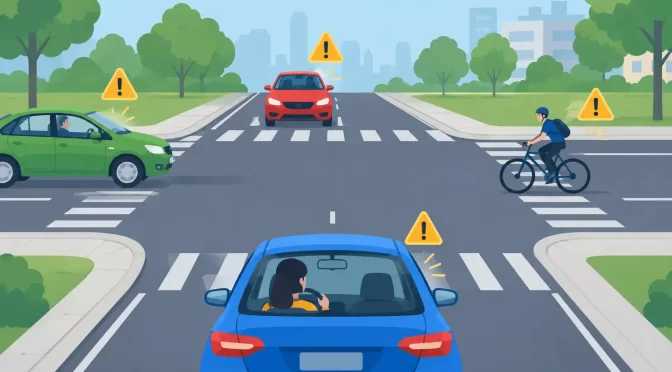
A quick glance is not enough at an intersection. Learners sometimes focus only on the vehicle directly ahead or only look in the direction they plan to turn. This can mean missing a cyclist beside the car, a pedestrian stepping off the kerb, or a vehicle approaching faster than expected.
Build a consistent observation routine. As you approach, check mirrors, identify signs and road markings, look ahead, then scan across the intersection before moving. When turning, look through the turn and keep checking for pedestrians and cyclists until the vehicle has completed the manoeuvre.
At a stop sign, come to a complete stop. Rolling slowly through the line is not a proper stop. Stop where you can see safely, and if your view is blocked by parked cars, trees or another vehicle, creep forward carefully only after stopping first.
Misjudging gaps in traffic
Turning right across oncoming traffic is one of the most common pressure points for learner drivers. A gap may look large enough until you account for the other vehicle’s speed, wet roads, a downhill approach or your own time needed to turn.
Do not rely on the car behind you to decide when you should go. Wait until you have a clear, comfortable gap. If you hesitate because the gap feels tight, treat that hesitation as useful information and wait for the next opportunity.
When turning right at lights without a green arrow, enter the intersection only when it is safe and you can position correctly. Keep your wheels straight while waiting. If you are hit from behind with the wheels turned, your car could be pushed into oncoming traffic. Watch the lights, check opposing traffic and pedestrians, then complete the turn only when it is safe.
Forgetting pedestrians have priority
Pedestrians are easy to miss when your attention is fixed on traffic. This is especially common during left turns at traffic lights, where a learner sees a green light and starts moving without checking the crossing.
Before any turn, look for people waiting at the kerb, already crossing, pushing prams or moving quickly to catch a changing signal. Give way to pedestrians crossing the road you are entering. Also check for cyclists travelling alongside you, particularly before turning left.
A green traffic light does not remove your responsibility to give way where required. Treat every turn as a fresh observation task, not an automatic movement.
Choosing the wrong lane too late
Late lane changes create stress for everyone. Learners may realise they need to turn just as they reach the intersection, then brake suddenly or move across lanes without enough checking.
Plan ahead by reading signs well before the intersection. If lane arrows show that your lane must turn, commit to that direction. If you are in the wrong lane and cannot change safely, continue in the lane you are in and find a safe place to reroute. Missing a turn is inconvenient. Making a risky lane change is dangerous.
For driving tests, clear positioning matters. Approach in the correct lane, use your indicator early enough to communicate your intention and maintain steady speed unless conditions require you to slow down.
Turning too wide or cutting the corner
Poor steering control often shows up at intersections. Turning too wide can place your vehicle in the wrong lane or too close to other traffic. Cutting a corner can bring you over centre lines, into the path of an oncoming vehicle or dangerously close to pedestrians.
Set up your turn before you reach the corner. Reduce speed early, select the appropriate gear if driving manual, and look where you want the car to go. For a left turn, stay close to the left without scraping the kerb. For a right turn, position correctly and finish in the appropriate lane unless road markings direct otherwise.
Looking well into the road you are joining helps your hands follow a smoother path. If you stare at the kerb, parked car or oncoming vehicle you are worried about, your steering can follow your eyes.
Treating amber lights as an invitation to hurry
An amber light means stop if you can do so safely. It does not mean accelerate to get through before red. Learners who rush at amber lights can enter too late, brake harshly or make a turn without adequate observation.
As you approach a green light, assess it early. If it has been green for some time, prepare for it to change. Keep a safe following distance so you can brake progressively rather than slam on the brakes if the lights change.
There are situations where stopping suddenly would be unsafe, such as when a vehicle is following very closely or you are already too close to the line. This is why early scanning and sensible speed are so valuable. Good driving is about judgement, not blindly stopping or blindly continuing.
Blocking the intersection
Never enter an intersection unless there is room to leave it. Heavy traffic can tempt drivers to follow the car in front, only to become stuck across a pedestrian crossing or in the middle of the junction when traffic stops.
Wait behind the line until you can see enough space on the other side for your whole vehicle. This keeps crossings clear and prevents you from becoming an obstacle when lights change. It also shows strong awareness in a practical driving test.
Ignoring signs, arrows and special road users
Melbourne roads can include tram tracks, clearways, bicycle lanes and complex lane arrangements. At some city intersections, hook turn signs and markings require particular attention. Do not assume the vehicle in front knows the correct procedure – read the signs yourself.
Road markings are instructions, not suggestions. Follow arrows, stay out of marked bicycle lanes unless you are permitted to enter them for a turn, and be alert around tram corridors. If an intersection is unfamiliar, reduce speed early enough to understand it rather than making a last-second decision.
A simple approach for safer intersection decisions
Use the approach phase to prepare, not panic. Check mirrors, identify the control at the intersection, choose your lane, indicate when needed and adjust speed. At the give way point, look carefully in every relevant direction and make your decision based on the road conditions in front of you.
Then complete the manoeuvre smoothly. Keep scanning as you turn, maintain control of the vehicle and accelerate only when the road ahead is clear. This process becomes natural with guided practice, but it needs to be practised in different conditions – quiet streets, busy main roads, roundabouts, traffic lights and wet-weather driving.
Build confidence before your driving test
Intersection errors are rarely about a lack of courage. More often, they come from not having a repeatable routine under pressure. Patient practice helps you recognise hazards earlier, judge gaps more accurately and stay calm when another driver is waiting behind you.
Learning Path Driving School can help learners build these habits through practical, VicRoads-focused lessons in manual or automatic vehicles. A good instructor will not simply tell you when to turn. They will help you understand why a gap is safe, where to look and how to recover calmly when an intersection does not go to plan.
The next time you approach an intersection, give yourself permission to slow down, look properly and wait for certainty. That one calm decision is how safe, confident driving starts.
